A Black-woman-owned social purpose firm that translates the urgency of global disruption into the granular work of institutional change. With communities, not for them. The work below is not a menu of services. It is one integrated practice, calibrated for institutions that cannot wait.
I.Where We Sit
A position the consulting market does not name.
Large advisory firms operate at the enterprise reporting layer. Traditional capacity builders work project by project. Academic partners operate from the research bench. None of those positions, on its own, holds the weight of what institutions actually need now.
Azimu Group occupies the systems layer. The place where governance behaviors, organizational culture, community trust and data architecture all have to move together, or none of it holds.
We do not extract knowledge from communities and translate it for institutions. We build with communities and transform institutions.
II.The Practice
Three methodologies. One integrated discipline.
↳ each one is rare. together they are rarer still.
i.Component One
Non-Extractive & Liberative Practice
Traditional research and consulting models extract knowledge, time and labor from communities without equitable benefit in return. Our engagement model rejects that pattern. Communities gain capacity, resources and power through every interaction.
Culturally responsive practice grounds the work in lived experiences, frames of reference and cultural contexts. Academic knowledge becomes meaningful only when it is situated in community reality.
ii.Component Two
Future-Focused Change Management
Most organizational change focuses only on the present problem. Our practice operates on dual timescales: addressing current barriers while building readiness for the disruptors that will shape the next decade.
Climate change, automation, wealth inequality, hyper-urbanization, pandemic vulnerability. The same engagement that fixes today's policy also builds the capacity to navigate tomorrow's compounding shocks.
iii.Component Three
DuBoisian Peer-to-Peer Research
Community members are positioned as researchers, not subjects. Barbers, faith leaders and formerly incarcerated advocates carry relational reach into populations that conventional methodology cannot.
This is the tradition W.E.B. Du Bois positioned a century ago, integrated as professional discipline rather than borrowed reference. The data is qualitatively superior because trust was built before instruments were fielded.
III.What We Hold
Five things we believe. Without exception.
01
Principled
We hold convictions and we say so clearly.
Equity is not a marketing position. It is how we decide what work to take on. Language carries moral weight here, used with precision rather than performance.
02
Community-Proximate
We are not outside looking in.
Lived proximity is methodological. It shapes what questions we ask, what we notice in a room, what we refuse to let slide past in a data set.
03
Systems-Focused
We see the structure, not just the symptom.
We trace root causes and ground recommendations in evidence. We do not offer band-aids. We offer infrastructure that survives the engagement.
04
Joyful
This work is serious. It is not somber.
Sustainable change requires people to feel energized, not overwhelmed. We bring laughter into the work because joy is infrastructure for hard conversations.
05
Evidence-Grounded
We back the claim. Always.
Numbers, names, outcomes, context. Not "extensive experience" but specific dates, specific clients, specific measurable change in real places.
IV.How We Work
Five principles. Non-negotiable.
↳ how we hold the work as we grow.
i.
No engagement starts without a relationship. Business development without warm introduction or existing connection requires additional internal review before proposal commitment.
ii.
Every engagement, at every tier, includes a community-facing touchpoint. Even Tier 1 Rapid Assessments include at least one session with a community-proximate advisor.
iii.
Subconsultants are vetted for values alignment, not just credentials. The network of published and experienced partners must demonstrate familiarity with community-centered practice.
iv.
The methodology is not customized away. Named offerings can be scoped and adapted. The core architecture (non-extractive practice, futures orientation, peer-to-peer research) cannot be removed to fit a budget or timeline.
v.
Community voice appears in deliverables, not just in the engagement process. Every final deliverable includes a section or element reflecting community-generated insight.
V.The Foundation
Founder-led. Practitioner-built. Peer-reviewed.
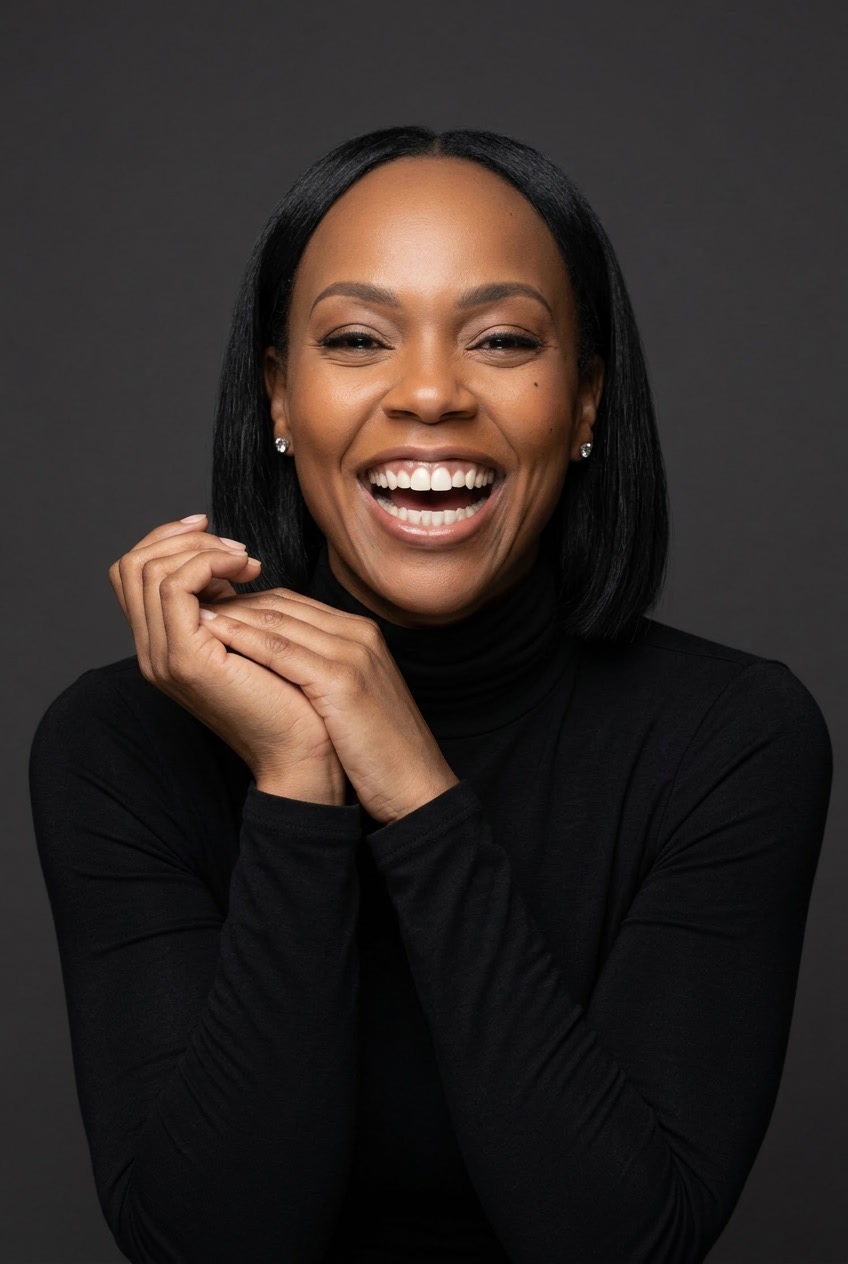
Dr. Nikka Lemons, Ph.D.
Azimu Group is founder-led by Dr. Nikka Lemons — an organizational designer, urban planner and equity strategist with more than 20 years of experience and a peer-reviewed scholarship record on Resilience Debt and Spatial Reconciliation.
Across her career, Dr. Lemons has managed over $165 million in public investment and designed institutional change frameworks for government and philanthropic leaders nationwide. Her doctoral research at the University of Texas at Arlington applied the United Nations Framework for Analysis of Atrocity Crimes to U.S. spatial policies, producing the conceptual foundation that the Resilience Debt Index now operationalizes.
The team she has assembled brings urban planners, policy strategists, data analysts, public health practitioners, organizational designers and community researchers together as a single practice. Each carries deep domain expertise. Each carries lived proximity to the populations the work serves. Both are credentialed.
CertificationOMWBE-certified Minority Business Enterprise
StructureBlack-woman-owned Social Purpose Corporation
HeadquartersSeattle, WA — operating nationally and internationally
Affiliated EntityJust Society Technologies — proprietary data tools, pending patents
ScholarshipPeer-reviewed publication record across the practice
SectorsGovernment, education, philanthropy and international development
if it sounds like a fit —
Start with a conversation.
Tell us what you are working on. We will tell you whether we are the right fit and, if not, who is. The first conversation costs nothing and asks nothing.